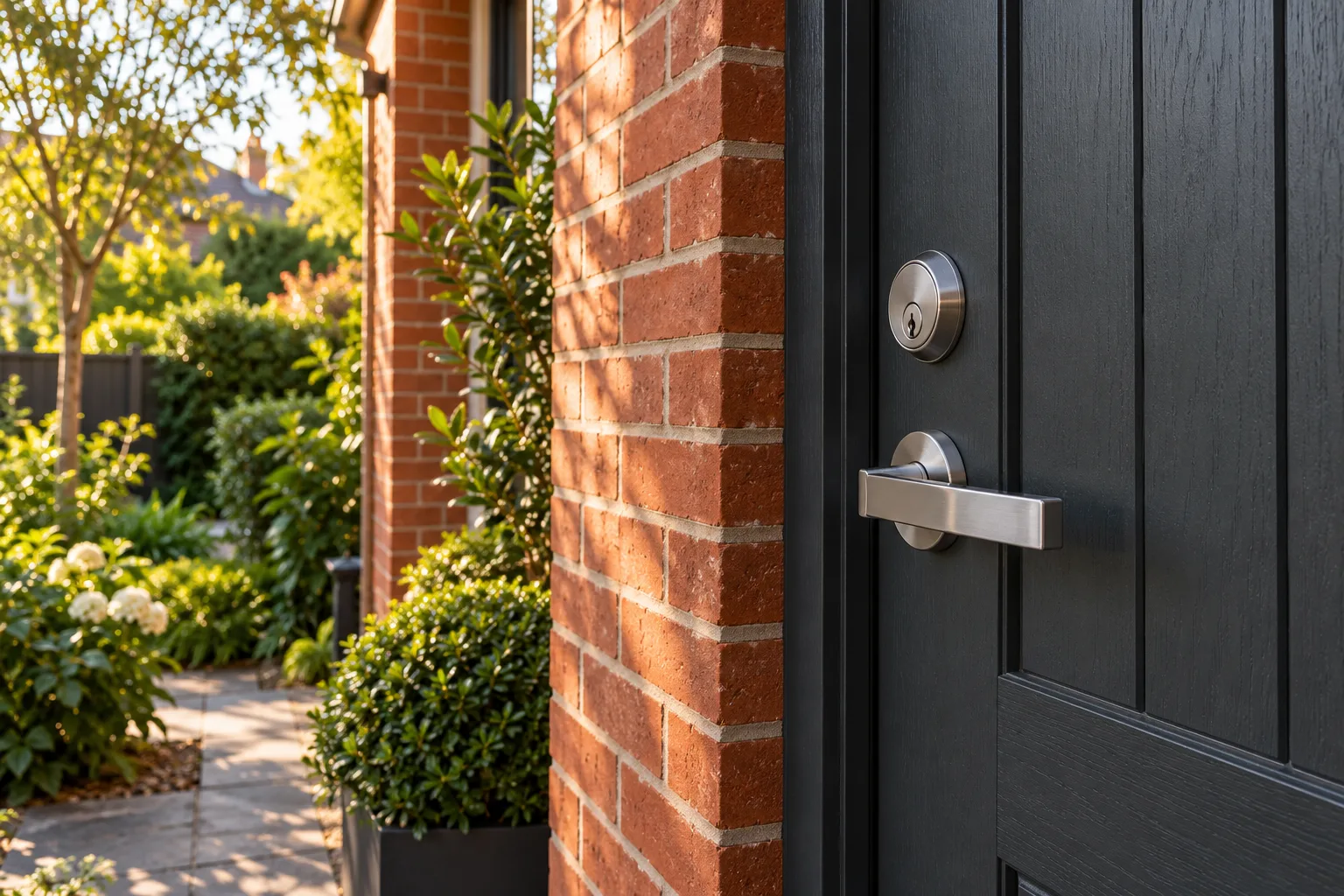
When replacement is the useful change
Replacing a lock changes the hardware on the door. That may be the useful option when a lock is damaged, worn, unreliable or no longer suits the way the property is used. A change of occupants can also prompt a review, but the real concern may be control of old keys rather than the condition of the lock. Explain the reason for the request first. It helps distinguish replacement work from a repair or a rekey and avoids choosing hardware before the problem is understood.
Matching the hardware to the door
The door and its existing fittings matter as much as the appearance of a new lock. Tell the locksmith whether you are dealing with an entrance door, another external door or a business entry, and mention other hardware already fitted. Replacement choices should be considered around that door and the access arrangement required. A new product is not automatically a direct substitute for every existing fitting, so suitability is checked before the installation scope is agreed.
Planning more than one entrance
If several doors are involved, list them before the visit and explain whether they currently use the same key. A front door, back door and another entrance may have different hardware, even if a simpler key arrangement is the aim. Ask whether compatible replacements can support the key plan you want. Treat the affected entrances as one access arrangement rather than a collection of unrelated purchases, and identify any doors that should remain separate.
Supply, fitting and the agreed work
The lock-change service includes supplying and fitting replacement hardware. Discuss what is proposed, which doors it covers and how the new keys will be arranged before proceeding. If you already have a particular product in mind, describe it when making contact so its suitability can be considered. An estimate for one door should not be assumed to cover additional entrances, new hardware choices or other work discovered during the visit; clarify changes before they are carried out.
Checking the replacement before finishing
After fitting, the lock's operation and the new key arrangement need to be checked. Make sure the intended users understand how the door is secured and which keys operate it. If the work forms part of a move or tenancy change, keep track of the keys handed over and identify any other entrances that have not been included. Replacement of one lock does not change access through every other door at the property.
Questions about lock changes
Should I replace the lock or have it rekeyed?
If the existing hardware remains suitable and the concern is who has a key, rekeying may address that concern while retaining the lock. Replacement is the hardware option when a lock is worn, damaged or a different fitting is required. The existing lock is checked before choosing.
Can several doors use the same key?
Explain that preference before the work is arranged. A shared-key arrangement depends on compatible hardware and the intended access plan. Do not assume every existing lock can be combined without checking the individual fittings.
Does replacing the front-door lock secure every entrance?
No. It changes the access arrangement for the lock included in the work. If other entrances or keys are also a concern, list them so their condition and access can be considered as part of the same visit.